Tìm hiểu và phối mã màu DMC chuẩn xác
Một khi bạn hiểu cách các con số này vận hành — và cách phối hoặc thay thế chỉ thêu — bạn sẽ tránh được những sai sót tốn kém, giảm thiểu việc phải tháo chỉ và đạt được thành phẩm đồng nhất, tinh tế hơn.
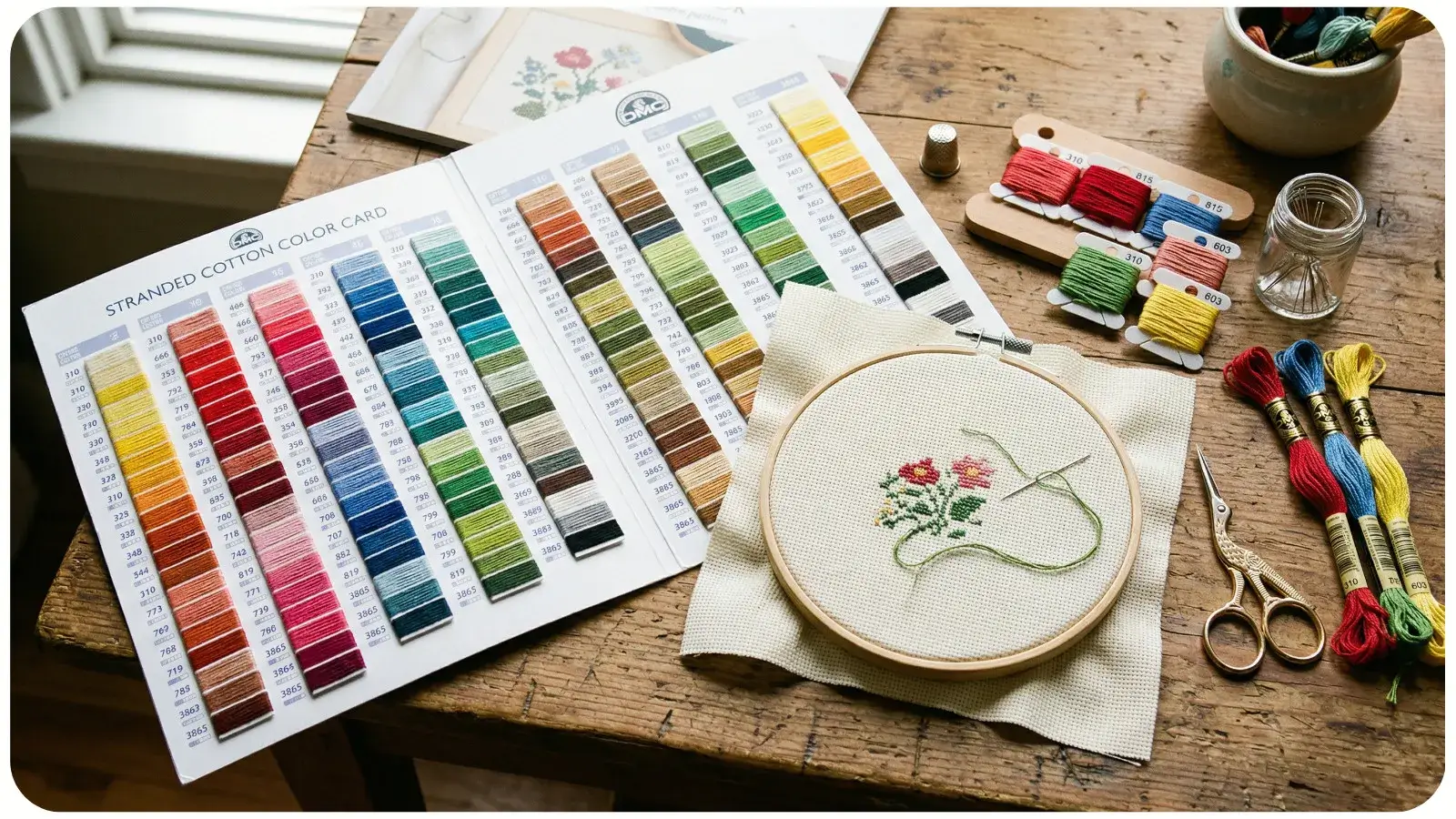
Nếu bạn đã từng nhìn chằm chằm vào một mẫu thêu và tự hỏi tại sao "DMC 310" lại trông không giống gì "DMC 3799," bạn không hề đơn độc. Hiểu rõ mã màu DMC là một trong những kỹ năng nền tảng giúp phân biệt một người mới bắt đầu với một nghệ nhân thêu thùa tự tin.
Việc nắm vững hệ thống mã số này không chỉ giúp bạn quản lý kho chỉ thêu của mình tốt hơn mà còn nâng tầm thẩm mỹ cho tác phẩm. Hãy cùng chúng tôi khám phá từng bước một.
Dụng cụ cần thiết
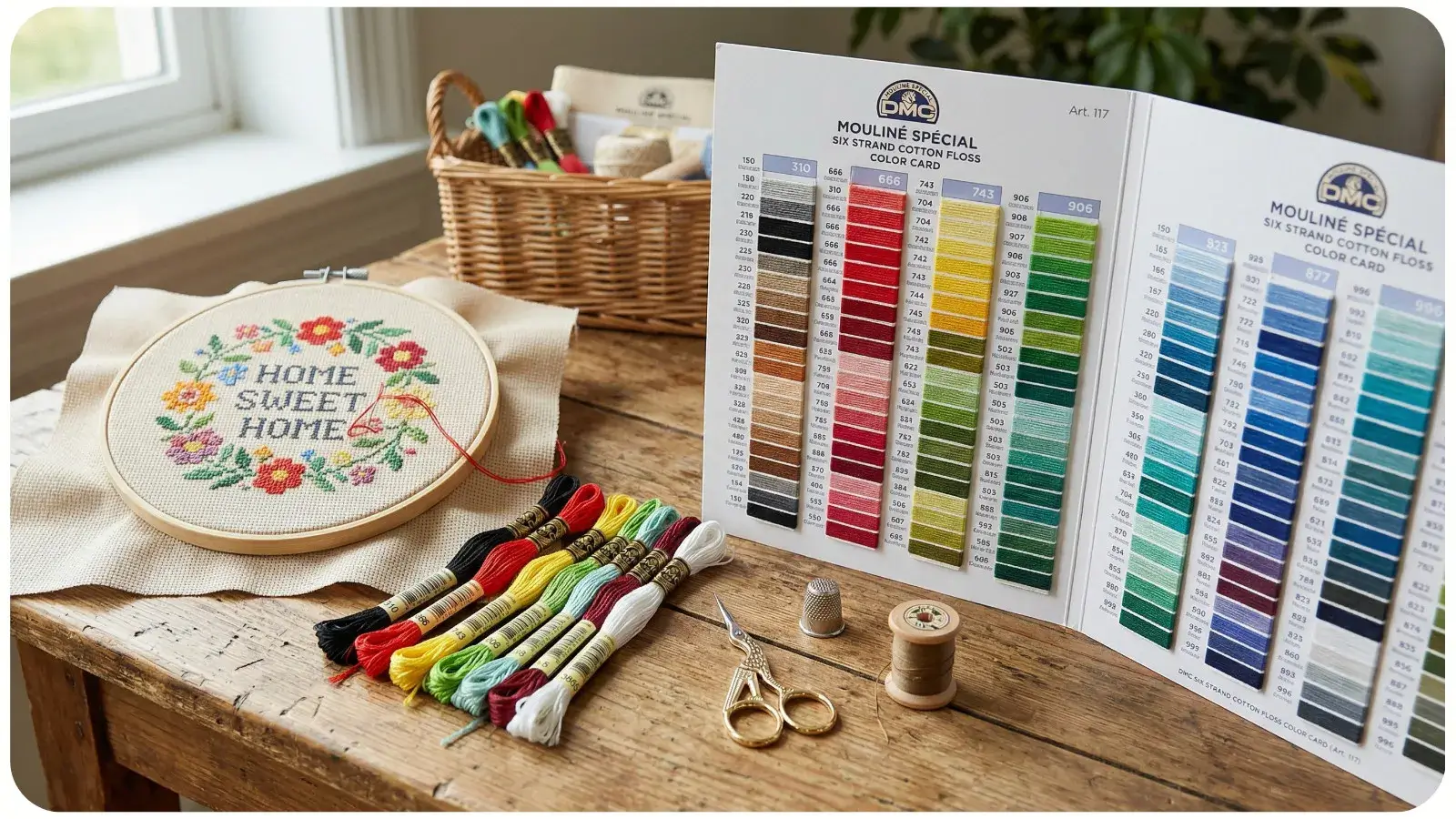
Trước khi bắt đầu đối chiếu màu sắc, hãy đảm bảo bạn có trong tay:
- Bảng màu DMC (ưu tiên loại có mẫu chỉ thật đính kèm);
- Mẫu thêu (Pattern) của bạn;
- Vải Aida (kích thước bạn chọn, ví dụ 14ct hoặc 16ct);
- Ánh sáng tốt (ánh sáng tự nhiên hoặc đèn chuyên dụng có độ hoàn màu cao);
- Tùy chọn: Hộp đựng chỉ hoặc lõi quấn chỉ (bobbins);
Hướng dẫn từng bước: Tìm hiểu & Phối màu DMC
1. Mã màu DMC là gì?
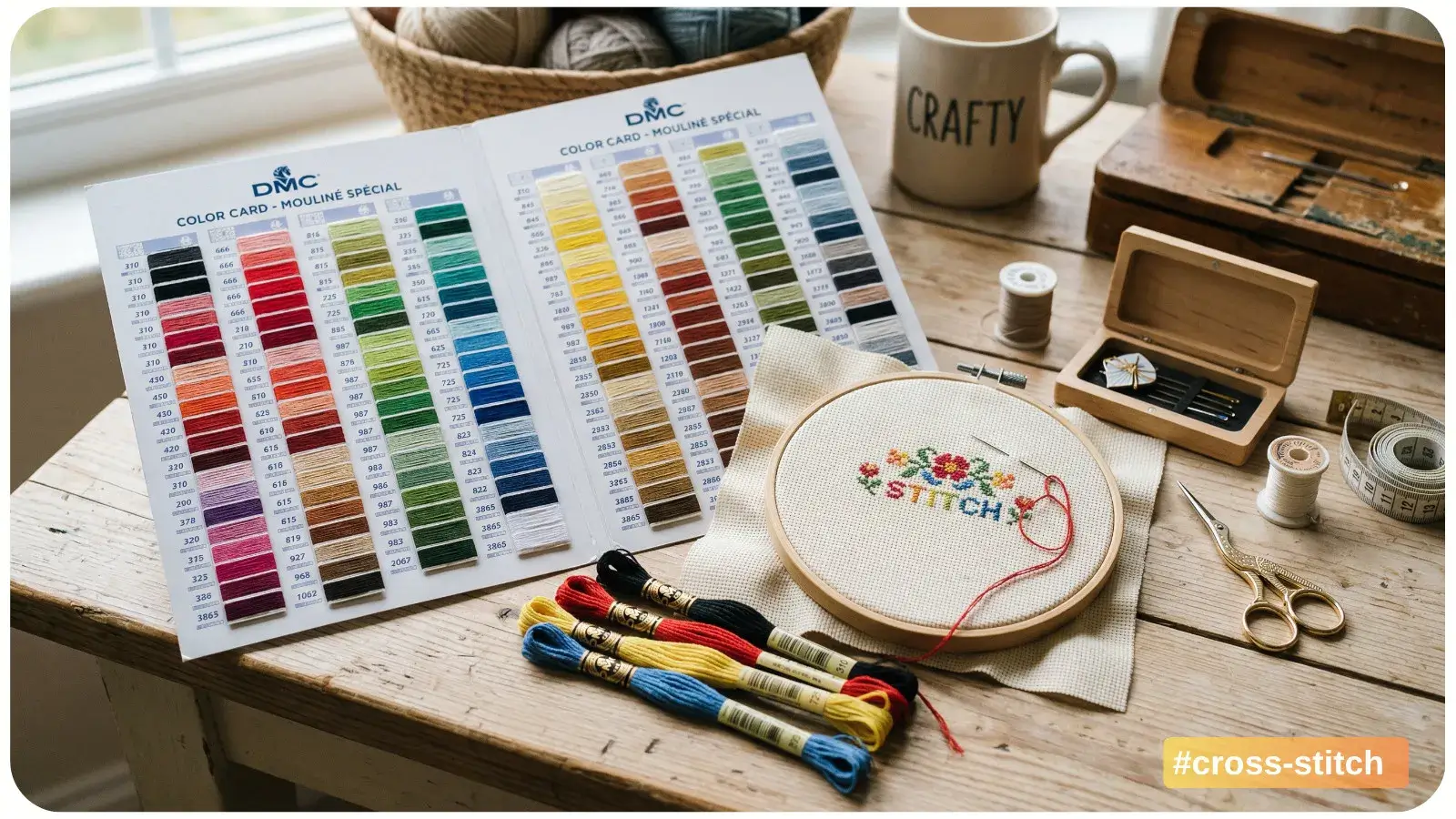
DMC gán một mã số duy nhất cho mỗi màu chỉ thêu. Những con số này không tuân theo quang phổ màu mắt thường thấy — chúng là một phần của hệ thống độc quyền được phát triển qua nhiều thập kỷ.
Ví dụ:
- 310 = Màu đen;
- 666 = Màu đỏ tươi;
- Blanc = Màu trắng tinh;
Lưu ý quan trọng: Bản thân các con số không biểu thị cường độ đậm nhạt hay thứ tự của màu. Bạn không thể "đoán" màu sắc chỉ dựa vào con số.
2. Cách đọc mẫu thêu với mã DMC.
Hầu hết các mẫu thêu đều liệt kê danh sách màu sắc đi kèm với các ký hiệu. Mỗi ký hiệu sẽ tương ứng với một mã số DMC cụ thể.
Ví dụ bảng ký hiệu:
- ● = DMC 310;
- ▲ = DMC 742;
- ■ = DMC 3843;
Khi thêu, hãy luôn đối chiếu ký hiệu trên bản vẽ với mã số chỉ thêu chính xác — đừng chọn màu theo cảm tính dựa trên hình ảnh minh họa.
Lời khuyên chuyên gia: Các tông màu gần nhau (như 317 và 414) có thể trông gần như y hệt dưới ánh sáng yếu, nhưng khi lên vải sẽ tạo ra hiệu ứng hoàn toàn khác biệt.
3. Sử dụng Bảng màu DMC (Vũ khí bí mật của bạn)
Một biểu đồ in trên giấy có thể hữu ích, nhưng một bảng màu có mẫu chỉ thật là yếu tố sống còn để đảm bảo độ chính xác tuyệt đối.
Tại sao? Vì:
- Màu sắc trên màn hình luôn bị sai lệch (điện thoại ≠ thực tế);
- Các lô nhuộm (dye lots) có thể khác biệt nhẹ;
- Ánh sáng phòng thay đổi cách chúng ta nhìn nhận màu sắc;
Hãy đặt sợi chỉ của bạn cạnh mẫu trên bảng màu dưới ánh sáng tự nhiên để xác nhận trước khi thêu các mảng lớn.
4. Cách phối chỉ thêu như một nghệ nhân?
Phối màu không chỉ là chọn màu "gần giống". Đó là sự thấu hiểu về sắc độ, tông màu và độ tương phản.
Hãy tập trung vào 3 yếu tố này:
1. Sắc độ (Value - Sáng vs Tối). Quyết định chiều sâu và hiệu ứng đổ bóng của thiết kế.
2. Tông màu ẩn (Undertone - Ấm vs Lạnh). Cùng là màu đỏ nhưng có thể nghiêng về cam hoặc xanh dương — điều này cực kỳ quan trọng trong thêu chân dung và hoa cỏ.
3. Độ bão hòa (Saturation - Trầm vs Rực rỡ). Một màu xanh lá xỉn so với một màu xanh lá tươi sẽ thay đổi hoàn toàn cảm xúc của tác phẩm.
5. Thay thế màu DMC một cách an toàn.
Đôi khi bạn không có sẵn chính xác mã màu cần thiết. Đó là lúc kỹ thuật thay thế thông minh phát huy tác dụng.
Khi nào có thể thay thế: Thêu nền, các mảng màu lớn không quá chi tiết hoặc các yếu tố trang trí phụ.
Khi nào KHÔNG nên thay thế: Khuôn mặt và tông da, các dải màu chuyển tiếp mịn (gradient) như bầu trời, và các chi tiết có độ tương phản cao.
Chiến lược thay thế:
1. Tìm mã màu gần nhất trên bảng màu thực tế;
2. So sánh dưới ánh sáng tự nhiên ban ngày;
3. Thêu thử một đoạn nhỏ trên vải Aida;
4. Kiểm tra từ khoảng cách xa (đây là chìa khóa!).
6. Các lỗi thường gặp cần tránh:
- Tin vào màu sắc trên màn hình → dẫn đến bảng màu bị lệch tông.
- Bỏ qua sự khác biệt giữa các lô nhuộm (dye lots) → sẽ thấy rõ vệt màu trên các mảng lớn.
- Trộn lẫn các thương hiệu mà không biết → DMC ≠ Anchor ≠ CXC.
- Bỏ qua bước thêu thử → rủi ro cao đối với các mảng chuyển màu tinh tế.
Kết luận
Làm chủ mã màu DMC không chỉ là một kỹ năng kỹ thuật — đó còn là một lợi thế sáng tạo. Khi bạn hiểu cách đọc, so sánh và thay thế chỉ thêu một cách có chủ đích, tác phẩm của bạn sẽ trông sạch sẽ, hài hòa và chuyên nghiệp hơn.
Lần tới khi bạn cầm một mẫu thêu lên, đừng chỉ máy móc đi theo con số — hãy hiểu chúng. Bởi vì thêu thùa tuyệt vời không chỉ là đặt các mũi khâu... mà là chọn đúng những mũi khâu đó.
