Cách thêu chữ thập nhanh hơn: 10 kỹ thuật tăng hiệu suất
Bằng cách tối ưu hóa không gian thêu, cải thiện phương pháp thêu và giảm thiểu các thao tác thừa, bạn có thể tăng đáng kể tốc độ thêu mà vẫn đảm bảo thành phẩm đẹp mắt.
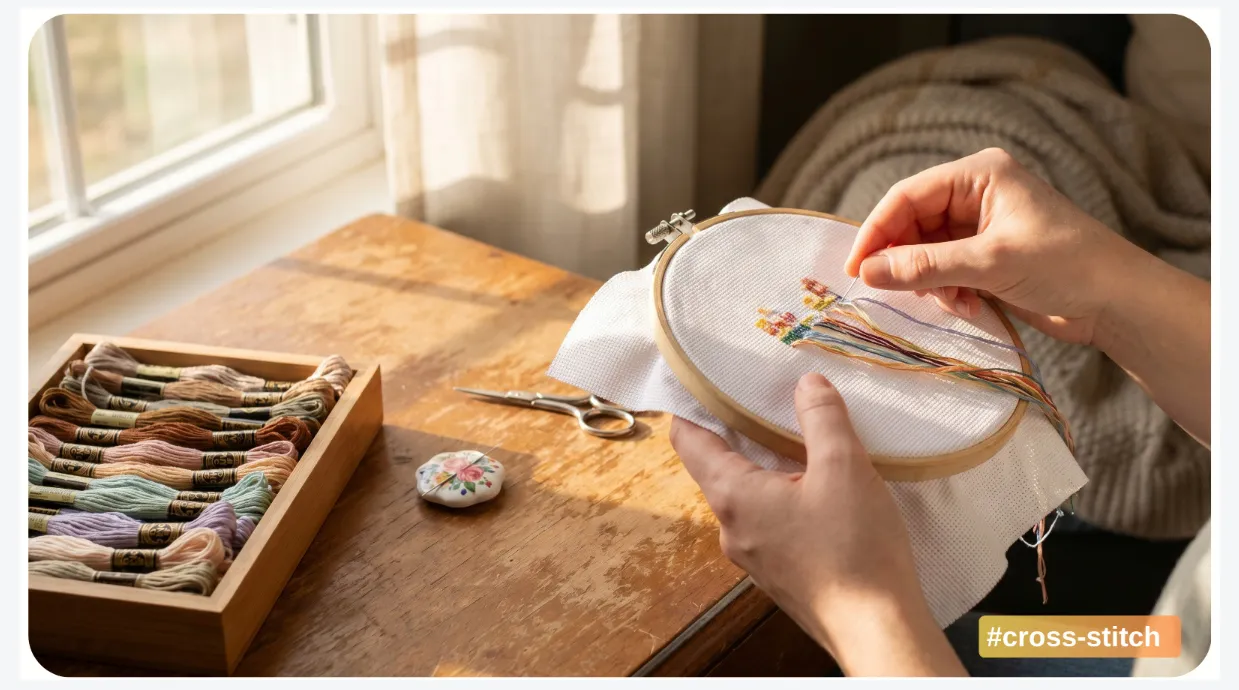
Cuộc sống bận rộn không có nghĩa là những dự án thêu thùa của bạn phải nằm chờ trên kệ. Cho dù bạn đang bận rộn với công việc hay gia đình, việc thêu thùa hiệu quả nằm ở kỹ thuật — chứ không phải ở việc vội vàng.
Hãy cùng khám phá những cách thực tế và chuyên nghiệp để thêu nhanh hơn và thông minh hơn.
Dụng cụ cần thiết
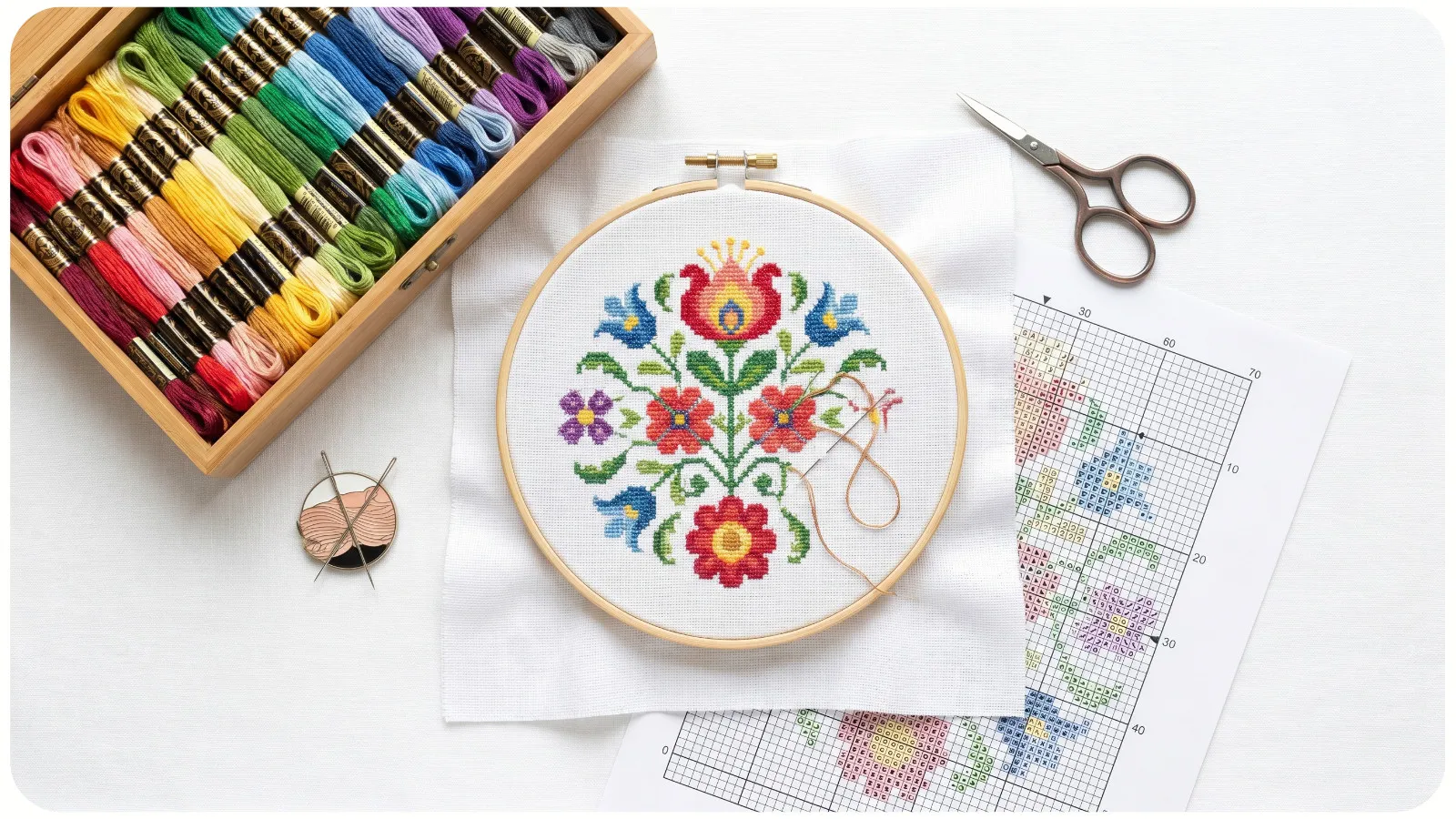
Trước khi cải thiện tốc độ, hãy đảm bảo bộ dụng cụ của bạn hỗ trợ tối đa cho hiệu suất:
- Vải Aida chất lượng cao (sợi dệt đều giúp dễ đếm);
- Chỉ thêu đã phân loại sẵn (trên lõi quấn chỉ hoặc thẻ chỉ);
- Kéo cắt chỉ sắc bén;
- Kim thêu phù hợp với kích thước vải (thường là size 24 hoặc 26);
- Nam châm giữ kim (để tránh làm mất kim);
- Phần mềm theo dõi mẫu thêu (kỹ thuật số hoặc bản in có đánh dấu);
- Tùy chọn: Khung cuộn (Scroll frame) hoặc khung Q-snap để giữ độ căng của vải tốt hơn.
Hướng dẫn chi tiết & Lời khuyên chính
1. Làm chủ phương pháp thêu luồn (Sewing Method).
Phương pháp thêu luồn (sewing method) — ngược lại với phương pháp đâm kim (stabbing method) — là một trong những kỹ thuật thêu nhanh nhất. Thay vì đưa kim lên xuống hoàn toàn qua vải, bạn luồn kim qua các lỗ vải trong một chuyển động liên tục.

Tại sao nó hiệu quả:
- Giảm thiểu chuyển động của tay;
- Rút ngắn thời gian cho mỗi mũi thêu;
- Giữ nhịp điệu thêu ổn định.
Kỹ thuật này phù hợp nhất khi thêu cầm tay thay vì dùng khung thêu cố định.
2. Sử dụng phương pháp thêu Đan Mạch (Danish Method) cho các hàng.
Thay vì hoàn thành từng chữ "X" một, hãy thêu một hàng các mũi thêu nửa (////), sau đó quay lại để hoàn thiện chúng (\\\\).
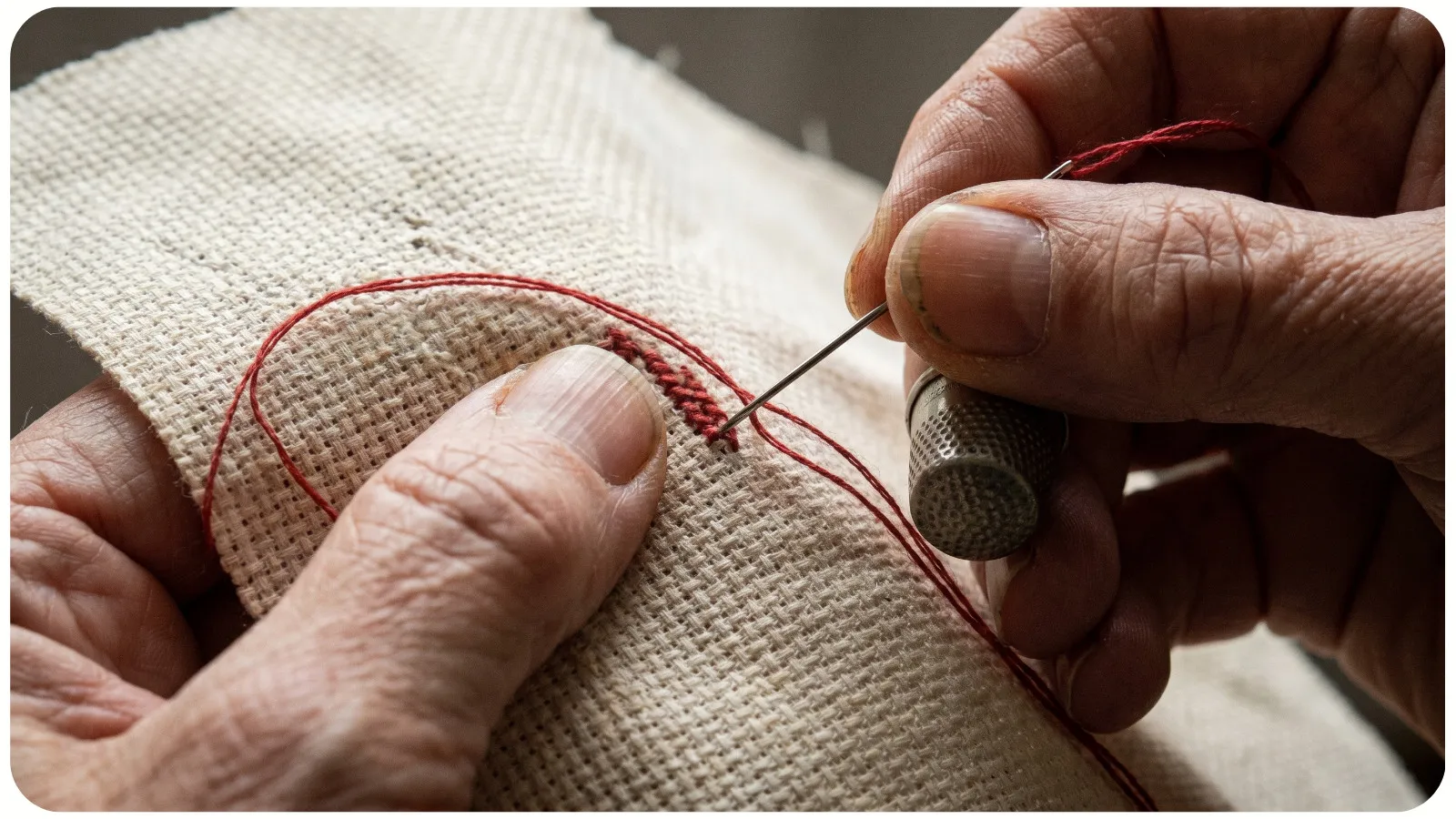
Ưu điểm:
- Ít thao tác luồn chỉ hơn;
- Mặt sau của tranh gọn gàng hơn;
- Tăng tốc độ rõ rệt khi thêu các mảng màu lớn.
3. Kẻ lưới cho vải (Pre-Grid).
Lỗi đếm sai là thứ làm chậm tốc độ của bạn nhiều nhất. Việc kẻ sẵn lưới 10x10 ô trên vải giúp loại bỏ việc phải đếm đi đếm lại nhiều lần.
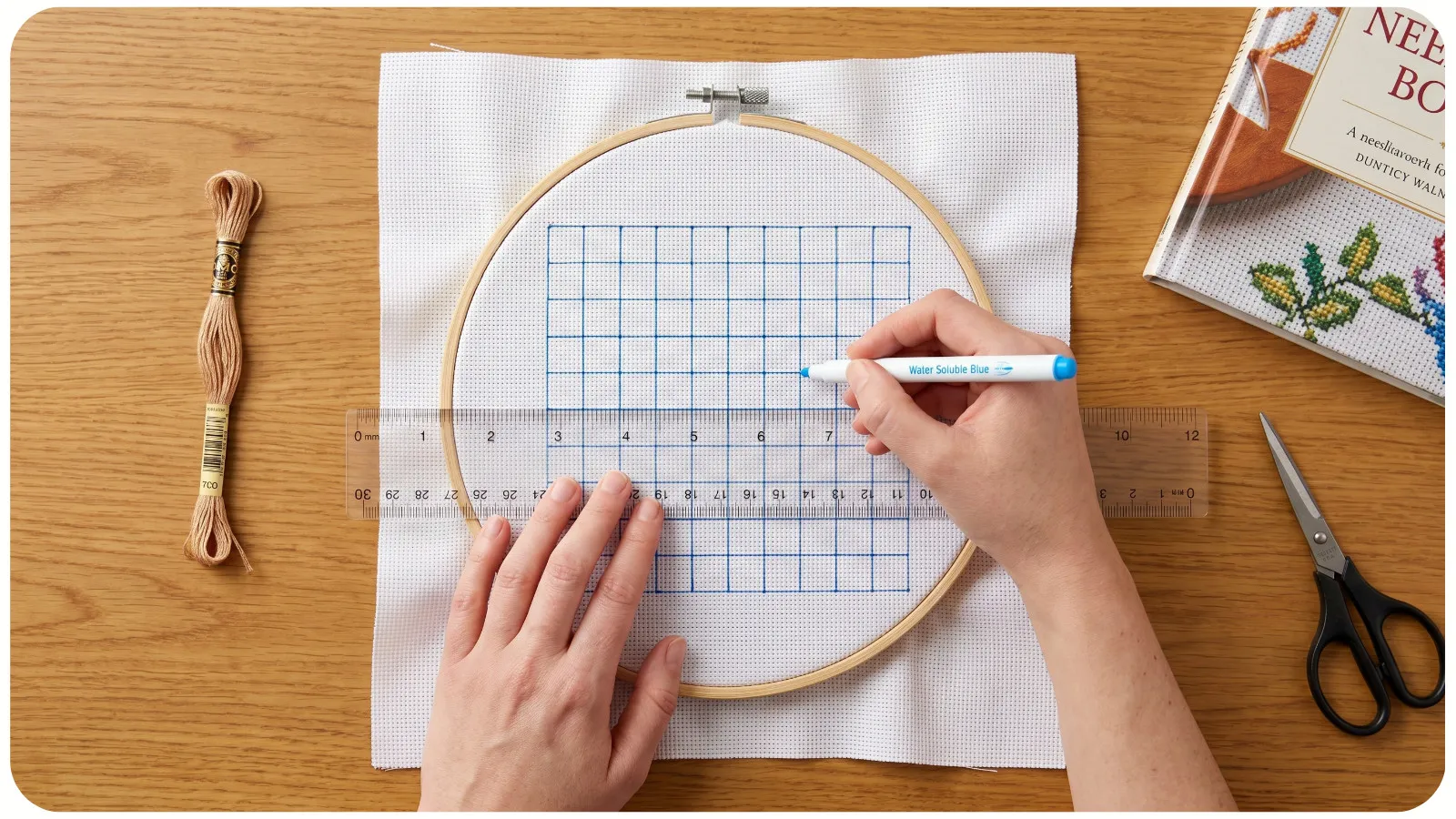
Các lựa chọn:
- Sử dụng bút vẽ vải có thể giặt sạch;
- Sử dụng vải Aida đã kẻ sẵn lưới;
- Sử dụng chỉ cước (monofilament) để tạo lưới tạm thời.
Kết quả: Định vị mũi thêu nhanh hơn, ít phải tháo chỉ do sai sót hơn.
4. Tối ưu hóa độ dài của chỉ.
Sử dụng độ dài chỉ thêu chính xác là yếu tố then chốt.
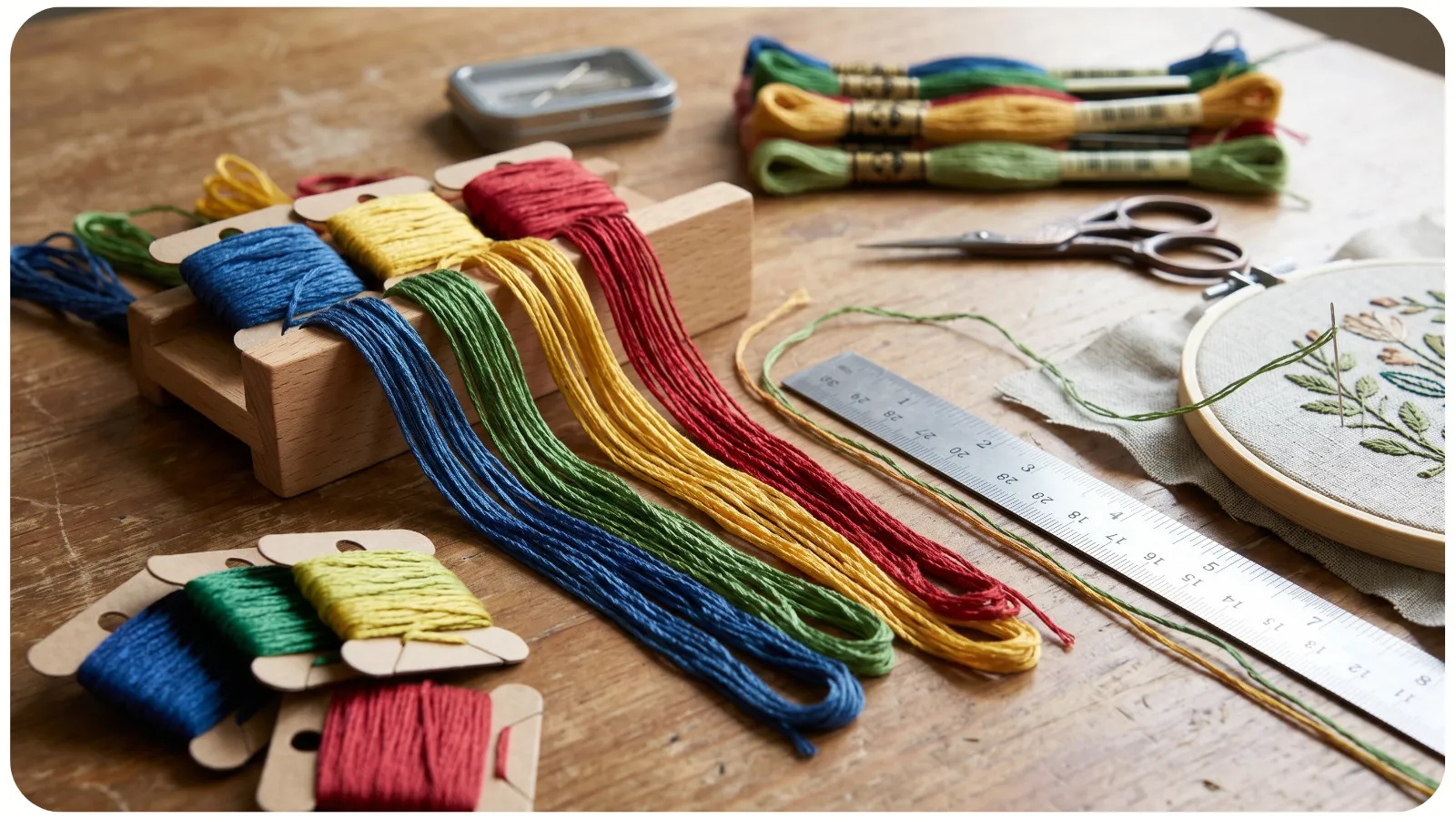
Độ dài lý tưởng: Khoảng 45-50 cm (18-20 inches)
- Chỉ quá dài → dễ bị rối và thắt nút;
- Chỉ quá ngắn → phải xỏ kim liên tục.
Độ dài cân bằng = dòng chảy thêu không bị gián đoạn.
5. Phương pháp "đỗ" chỉ (Parking Method).
Đối với các dự án nhiều màu, phương pháp Parking giúp giữ các sợi chỉ ngăn nắp và luôn sẵn sàng.
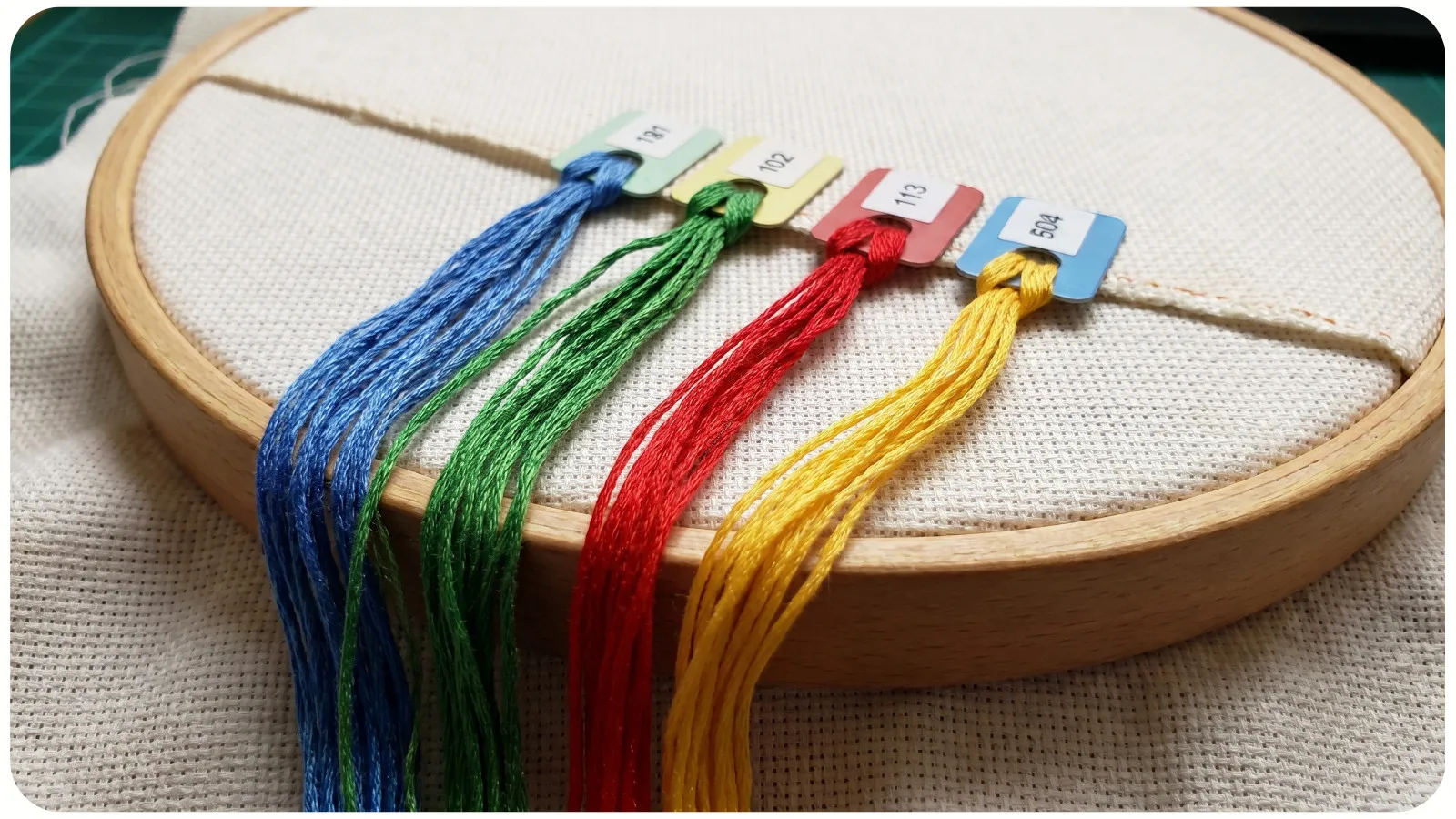
Cách thức:
- Để sợi chỉ lại trên vải tại vị trí của mũi thêu tiếp theo;
- Tiếp tục thêu khi bạn quay lại vùng màu đó.
Lợi ích: Loại bỏ việc phải thay chỉ liên tục và giữ đà thêu trong các thiết kế phức tạp.
6. Giảm thiểu việc tháo chỉ bằng cách đánh dấu mẫu thêu.
Luôn đánh dấu các mũi thêu đã hoàn thành.

Công cụ:
- Bút dạ quang (cho bản in giấy);
- Các ứng dụng như Pattern Keeper (cho bản điện tử).
Tầm quan trọng: Ít sai sót = ít phải gỡ chỉ = tiết kiệm thời gian khổng lồ.
7. Duy trì độ căng của vải phù hợp.
Vải bị lỏng sẽ làm chậm tốc độ và ảnh hưởng đến độ đồng đều của mũi thêu.
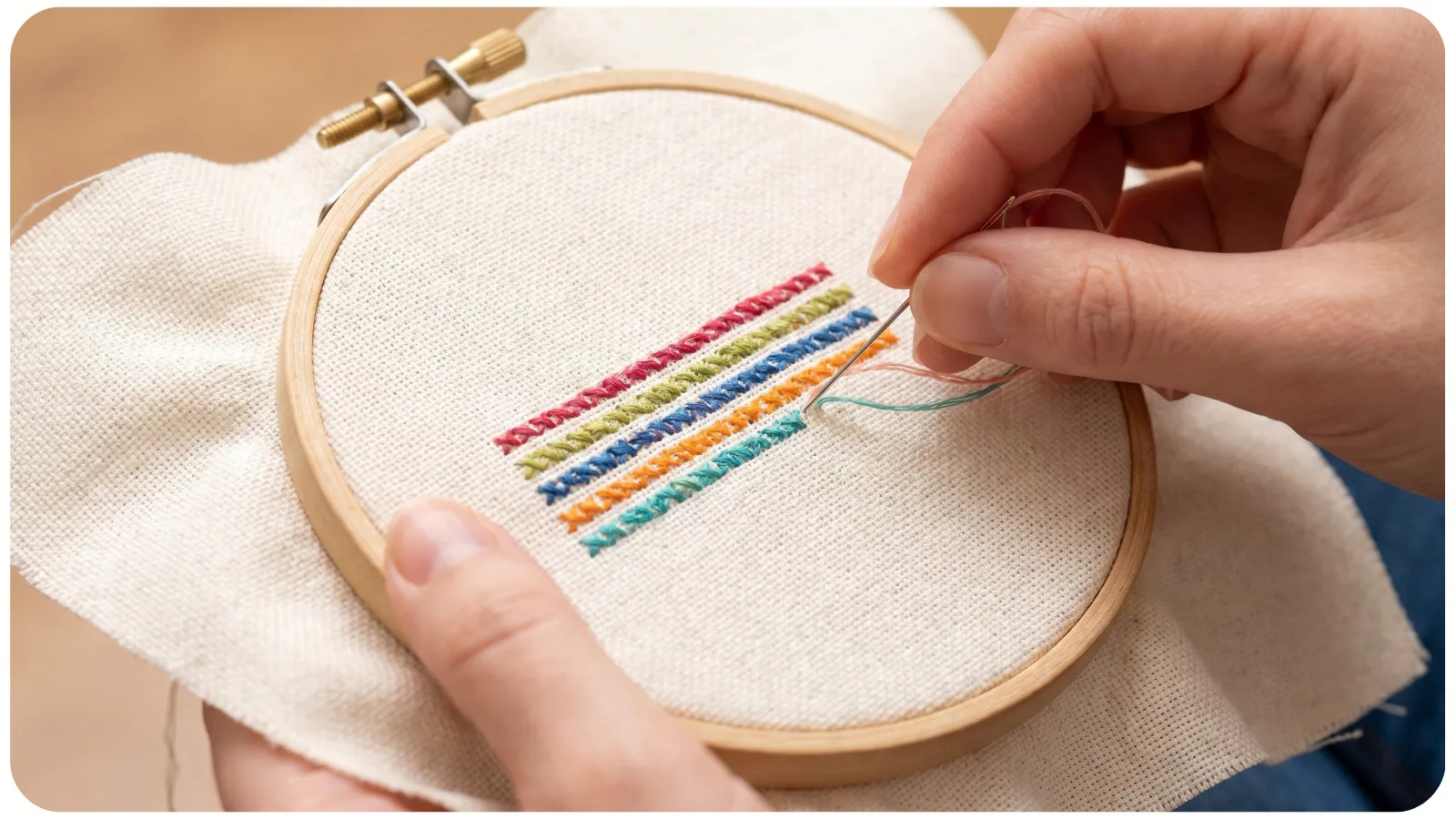
Lời khuyên:
- Sử dụng khung Q-snap hoặc khung cuộn để vải luôn căng;
- Kiểm tra và siết lại vải định kỳ.
Độ căng ổn định giúp kim đi qua vải mượt mà và nhanh hơn.
8. Dưỡng chỉ (Thread Conditioning).
Sử dụng sáp dưỡng chỉ (như sáp ong hoặc các sản phẩm tổng hợp thay thế) giúp giảm ma sát.
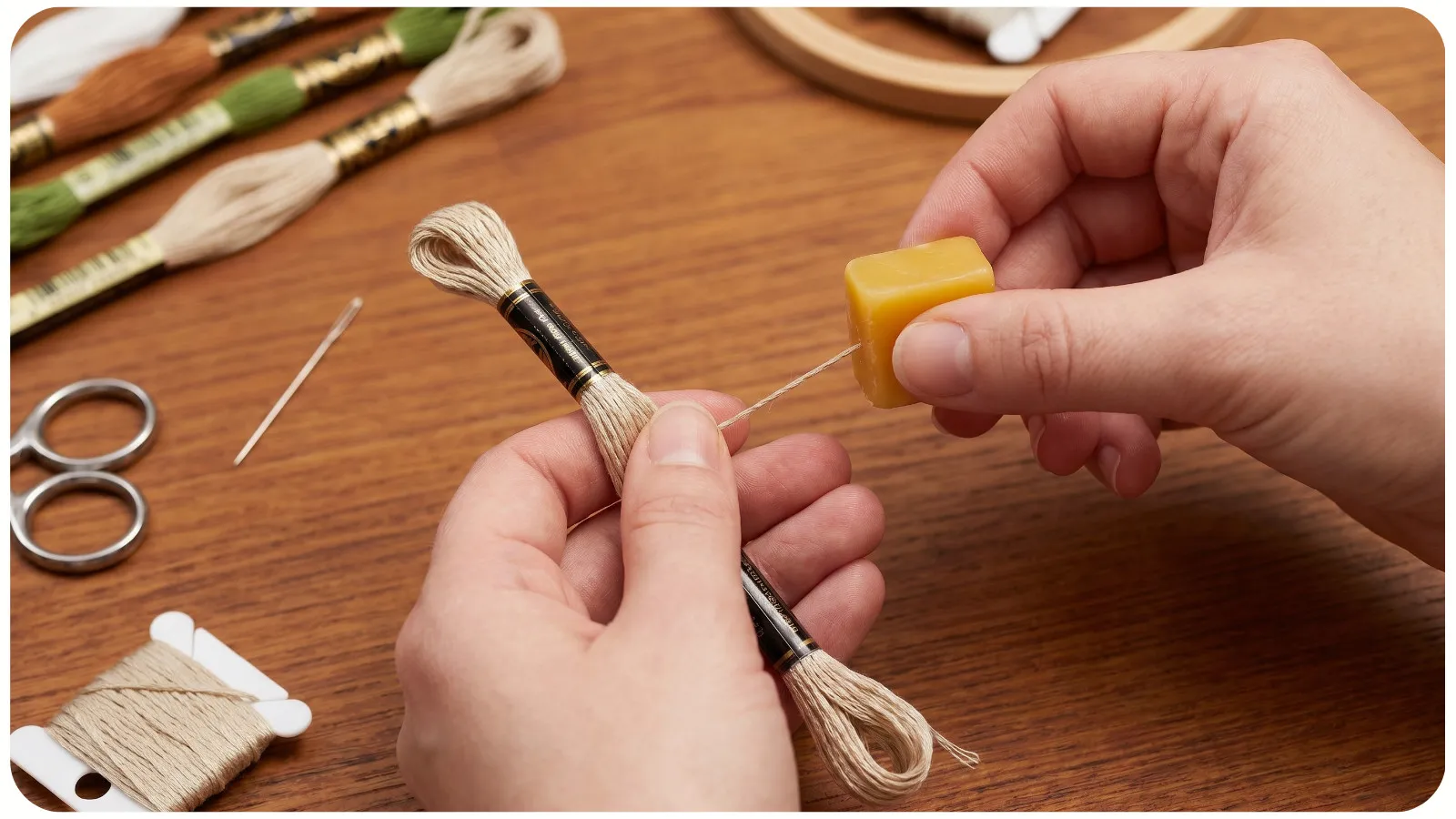
Lợi ích: Giảm tình trạng rối chỉ, giúp chỉ đi qua vải mượt mà hơn và cải thiện độ bóng của mũi thêu.
9. Sắp xếp không gian làm việc ngăn nắp.
Thời gian lãng phí vào việc tìm dụng cụ sẽ cộng dồn lại rất nhiều.

Thiết lập hiệu quả bao gồm:
- Nam châm giữ kim luôn ở cùng một vị trí;
- Chỉ thêu được sắp xếp theo biểu tượng hoặc mã số;
- Kéo cắt chỉ luôn trong tầm tay.
10. Thêu theo từng khối màu, tránh thêu nhảy cóc.
Việc thêu nhảy cóc khắp bản vẽ sẽ làm lãng phí thời gian và chỉ.
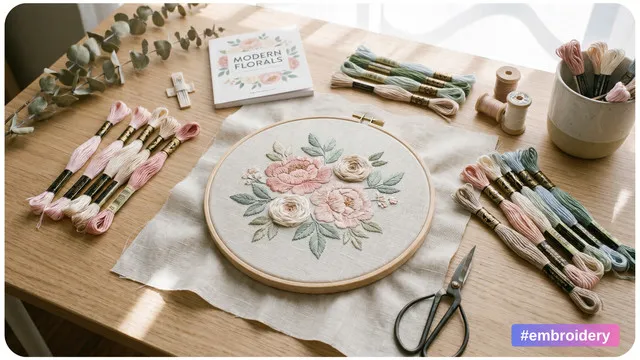
Thay vào đó: Hãy tập trung hoàn thành từng màu hoặc từng khu vực nhất định. Điều này giúp giảm số lần thay chỉ và cải thiện nhịp độ thêu.
Kết luận
Tốc độ trong thêu chữ thập không phải là sự vội vã — mà là sự hiệu quả, độ chính xác và quy trình làm việc thông minh. Bằng cách áp dụng những kỹ thuật này, bạn có thể đạt được những tiến triển rõ rệt ngay cả với lịch trình bận rộn. Những cải tiến nhỏ trong phương pháp và cách sắp xếp sẽ cắt giảm đáng kể thời gian thêu của bạn, đồng thời giúp công việc trở nên thư thái và thú vị hơn.
Nếu bạn đang tìm kiếm những mẫu thêu được thiết kế tối ưu cho người thêu, hãy khám phá các bộ sưu tập từ EZ Crossstitch — chúng rất hoàn hảo để bạn áp dụng những mẹo tăng tốc này vào thực tế.
Chúc bạn thêu thùa vui vẻ — và mong rằng chỉ thêu của bạn sẽ không bao giờ bị rối!
